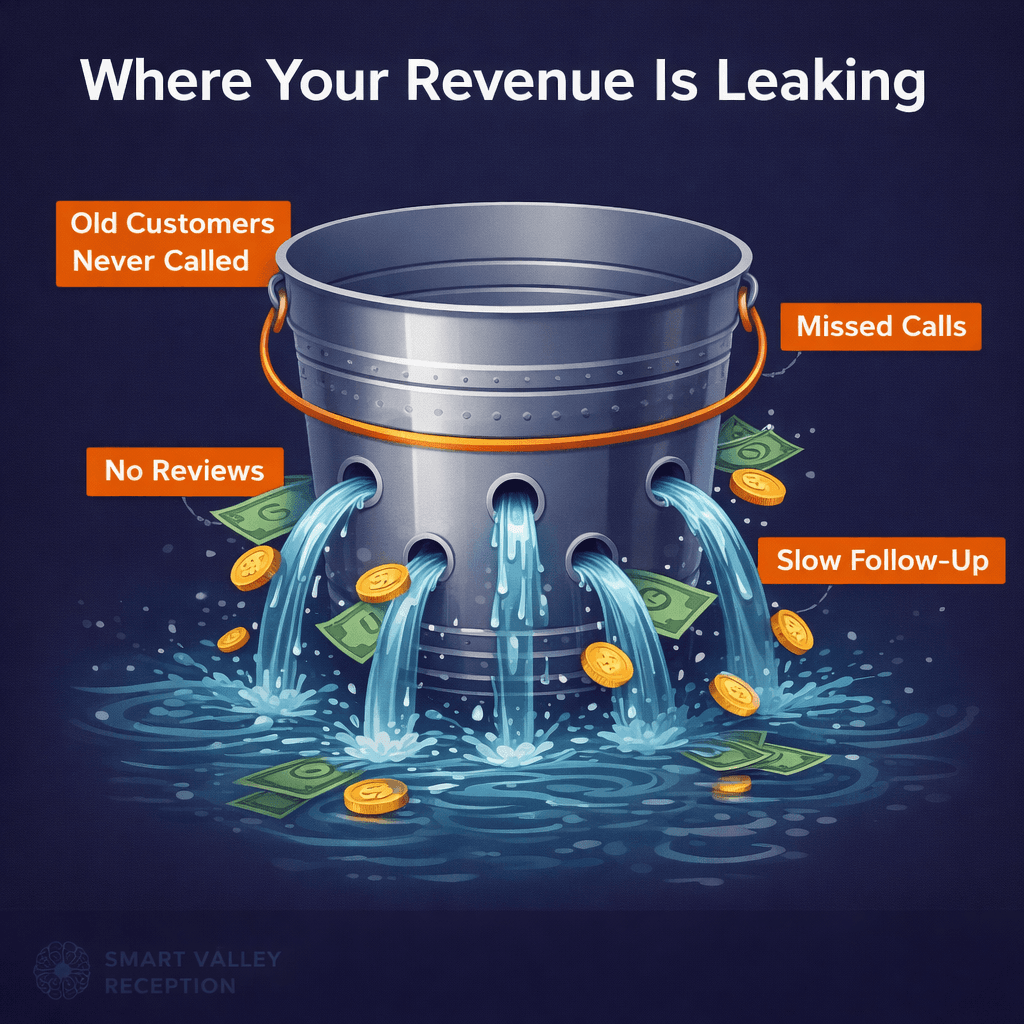

Your phones are ringing off the hook, your techs are sweating through back-to-back service calls, and somewhere between a refrigerant recharge in Scottsdale and an emergency compressor replacement in Mesa, a potential customer hit your voicemail and called your competitor instead. Summer in Phoenix does not slow down for anyone, and for HVAC companies, the busiest season is also the season most likely to expose gaps in how you handle incoming calls. In this post, we break down exactly why missed calls spike during peak heat, what it costs you in real revenue, and the practical steps you can take right now to make sure every call this summer turns into a booked job.
The Summer Rush Is Real: How Phoenix Heat Creates an HVAC Call Crisis
June 27th, 2023, Sky Harbor recorded 119 degrees. Not an anomaly — a preview of what Phoenix and Scottsdale HVAC companies face every summer. From late May through September, temperatures regularly sit above 110 degrees for stretches of days, and when a compressor fails at 7pm on a Tuesday, that homeowner is not waiting until morning.
The scenario plays out dozens of times a day across the metro: a tech is on a Scottsdale rooftop replacing a condenser, hands full, sweat soaking through his shirt, while three calls stack up on his cell. Emergency no-cool calls. A tune-up request from a homeowner in Ahwatukee trying to get ahead of the heat. A potential new install from a new build in North Phoenix. None of them get answered.
Industry data puts the problem in hard numbers: roughly 27% of HVAC calls go unanswered during peak season, and the average service ticket runs $300 or more. In most U.S. markets, HVAC demand spikes for six to eight weeks. In the Phoenix metro, the pressure is sustained for nearly five months. That duration is the difference between a manageable busy season and a structural problem.
Homeowners here treat AC failure the way most people treat a burst pipe. It is a genuine emergency. HVAC missed calls in summer are not just an inconvenience for contractors — they represent real, recurring revenue walking out the door.
The Four Reasons HVAC Techs Miss Calls on Their Busiest Days

That rooftop scenario from the previous section is not just a visual. It points to something structural about how HVAC missed calls accumulate during summer, and why good intentions are not enough to stop them.
1. Techs are physically on the job
A technician pulling a condenser coil under a crawlspace or torquing a refrigerant line on a second-story rooftop cannot answer a call safely or professionally. It is not laziness or poor customer service; it is physics. The job demands full attention, and breaking away mid-task creates safety risks and sloppy work. Calls go unanswered not because no one cares, but because no one can realistically stop.
2. One-person dispatch gets overwhelmed
Most small HVAC shops in Scottsdale and Phoenix run lean. One person handles incoming calls, manages the schedule, coordinates parts pickups, and keeps techs moving. When the schedule is packed, that person is already stretched. A ringing phone becomes a triage decision, and sometimes it loses.
3. After-hours emergencies have no one to catch them
Phoenix homeowners do not wait until 8am to report a no-cool situation. They call at 9pm, 10pm, or midnight when the house climbs past 85 degrees inside. If no one is staffed after hours, that call goes unanswered entirely, and the job goes to whatever competitor picks up first.
4. Call stacking during heat waves
When temperatures spike and multiple systems fail in the same neighborhood on the same afternoon, calls arrive in clusters. Even a fully staffed office can only handle one caller at a time.
A contractor on Reddit put it plainly: missed one call last summer, found out later it was a full system replacement. That single missed call was likely an $8,000 job. No voicemail, no callback, no second chance.
What Happens When a Phoenix Homeowner Hits Voicemail in July
The contractor misses the call. The phone rings to voicemail. What happens next is not what most HVAC owners assume.
Research on caller behavior consistently shows that the majority of people who reach voicemail do not leave a message and do not call back. In a non-urgent situation, maybe they try again later. In July, when the inside of a Scottsdale home is climbing toward 90 degrees at 7pm, they open Google and call the next company on the list. The window between a missed call and a lost job is measured in minutes, not hours.
This is what makes HVAC missed calls in summer a revenue problem, not just a customer service one. As one industry observation circulated widely on LinkedIn put it: most HVAC businesses don't lose jobs due to pricing; they lose them because no one answered the phone. In a market like the Phoenix metro, where dozens of companies are competing for the same emergency no-cool calls on the same 112-degree afternoon, being second to answer is functionally the same as not answering at all.
The math is straightforward. If a Scottsdale HVAC company misses 13 calls per month during peak season, at an average ticket of $300 to $500, that is $3,900 to $6,500 walking out the door every month. Across a full summer from May through September, that compounds to $15,000 or more in lost revenue. And that estimate assumes every missed call is a routine service job, not a system replacement.
Voicemail and Callbacks Are Not a Real Strategy During Peak Season
Those missed calls rarely sit in a queue waiting for you to get back to them. The contractor's intent, call everyone back by end of day, runs directly into a different reality on the homeowner's end.
A dental office can send a voicemail about a cleaning reminder and expect a return call tomorrow. An AC emergency in Phoenix in July operates on a completely different timeline. When the inside of a home hits 90 degrees at 8pm and children or elderly family members are in the house, the homeowner is not waiting two hours for a callback. They are already on the phone with whoever picked up next on their Google search.
Texting missed callers back is a smarter instinct than voicemail, and it does work, but only when it is fast, personally relevant, and connected to an actual booking path. Most HVAC owners juggling a full schedule in June do not have a system to send personalized follow-up texts to every missed call, confirm the issue, and get an appointment on the calendar without a back-and-forth chain. Manual callbacks and ad hoc texts are not bad ideas; they just do not scale when HVAC missed calls summer volume is hitting its peak and one person is managing everything.
The gap is not effort. It is infrastructure. What actually closes that gap looks different from anything most small HVAC shops in Scottsdale have tried before.
How an AI Receptionist Handles HVAC Call Volume Spikes Without Adding Staff

The infrastructure gap described above is not filled by hiring another dispatcher. Staffing a second person to handle phones costs $35,000 to $45,000 a year, and that person still cannot answer two calls at once or take a shift at 11pm without overtime. The actual fix is a system that does not have those constraints.
An AI receptionist service for HVAC and trade businesses like Smart Valley Reception works by forwarding calls from your existing number to a branded AI voice agent. Your phone line stays the same. When a call comes in and you cannot pick up, it gets answered immediately, by a voice that sounds natural, knows your business, and can handle the conversation without putting the caller on hold.
For an HVAC company in Scottsdale, that means a homeowner calling at 11pm during a heat advisory gets a real answer, not a voicemail. The agent confirms your service area, gives a realistic timeframe, answers questions about diagnostic pricing, and books directly onto the technician's calendar through Google Calendar or Cal.com. When three calls stack up simultaneously on a 113-degree afternoon, all three get answered. The agent captures each caller's name, address, and a description of the issue, so when the tech shows up the next morning, the job is already documented.
It is like having a front desk that never clocks out, never gets overwhelmed, and never forgets to log the call.
What it does not do is equally important to understand. It does not replace your existing phone line. It only operates within what you configure, meaning the knowledge base you build and the calendar you connect. It is not designed to resolve every edge case on its own, and for situations outside its scope, it can transfer to a human or flag the call for follow-up.
For HVAC owners who want to close the gap on HVAC missed calls summer before June arrives, a seven-day free trial is available to qualifying businesses. Start your seven-day free trial before the heat does.
Setting Up Your HVAC Business to Capture Summer Calls Before the Heat Hits

The system described in the previous section does not take weeks to stand up. But it does require a few intentional steps before the heat arrives, and the window to do it comfortably closes around Memorial Day.
Here is a practical three-step checklist for HVAC owners in Phoenix and Scottsdale who want to stop losing summer revenue to unanswered calls.
1. Audit your actual missed call rate
Pull your call log or voicemail count from last June or July, even a rough estimate. How many voicemails did you receive? How many calls did your phone log show as missed? If you cannot pull exact numbers, a week of manual tracking now will tell you enough. You need a baseline before you can measure whether anything you change is working.
2. Build a knowledge base that answers the calls you keep missing
The most common HVAC caller questions are predictable: which zip codes you serve across Scottsdale and North Phoenix, what a diagnostic call costs, how quickly you can respond to a no-cool emergency, and whether you take calls after hours. Document those answers in a format any system can use. This groundwork is what turns an answering solution from a call-catcher into an actual revenue tool.
3. Connect your calendar so bookings happen without a handoff
When a caller is ready to book, that moment should not require a human to complete it. Connecting Google Calendar or Cal.com to your answering system closes the loop automatically.
Scottsdale and North Phoenix HVAC companies that finish these three steps before late May enter June with infrastructure already in place. The ones that wait until the phones are ringing nonstop are playing catch-up on HVAC missed calls summer volume with no margin for error. Preparation now is the competitive edge later. Learn more about how Smart Valley Reception works or start your seven-day free trial before the surge begins.
Managing the summer surge in HVAC requests requires a strategic balance between field work and administrative responsiveness. While implementing better scheduling software or hiring temporary staff can help, these solutions often require significant oversight. If you want expert help managing your call volume and ensuring no customer is left waiting in the heat, you can learn more about our specialized support services. We are here to help your business stay cool and organized during the peak season.